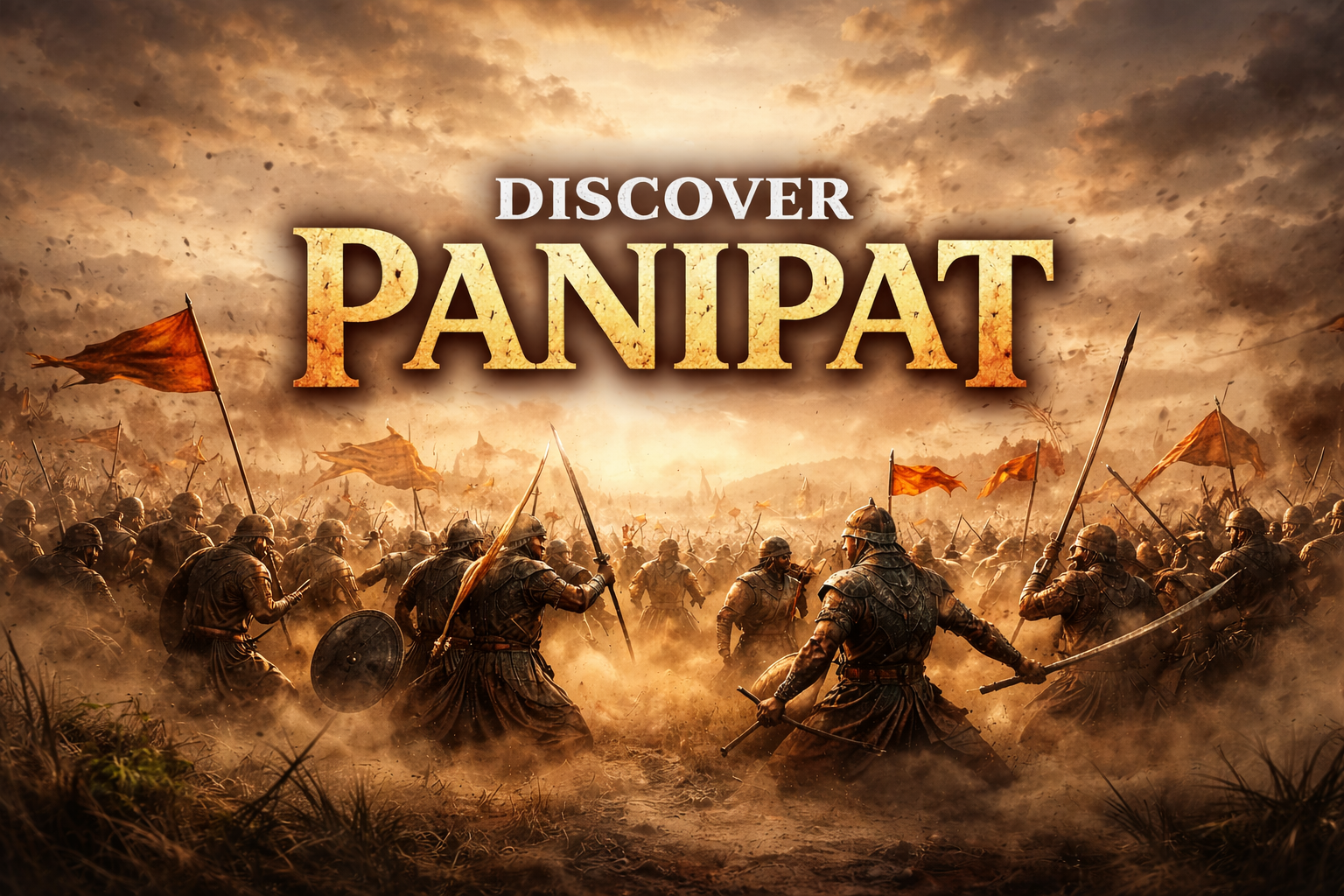

Discover the legendary battlefields, historical monuments, and accessibility of Panipat, seamlessly integrated into your journey from Delhi to the serene mountains of Himachal Pradesh.
Introduction:
Panipat, a name etched into the annals of Indian history, often conjures images of epic battles that shaped empires. But beyond its legendary battlefields, this vibrant city in Haryana is a bustling textile hub, a treasure trove of historical monuments, and an increasingly popular stop for travelers heading north. For those embarking on a picturesque journey from Delhi to Himachal Pradesh, Panipat offers a compelling blend of education and intrigue, conveniently located along the main artery of Indian travel – NH-44.
The Echoes of Empire: Panipat’s Pivotal Role in History
Panipat’s strategic location in the Indo-Gangetic Plain made it a critical gateway to North India, leading to three monumental battles that redefined the subcontinent’s political landscape:
- First Battle of Panipat (1526): The Dawn of the Mughal Empire This clash between Babur’s invading forces and Ibrahim Lodi’s Delhi Sultanate marked a turning point. Babur’s decisive victory, largely attributed to his innovative use of gunpowder and artillery, laid the foundation for the mighty Mughal Empire, which would dominate India for centuries.
- Second Battle of Panipat (1556): Akbar’s Consolidation of Power Barely 30 years later, Panipat witnessed another pivotal confrontation. Young Akbar, under the regency of Bairam Khan, faced the formidable Hindu king Hemu. Akbar’s victory here cemented Mughal rule, establishing their supremacy and paving the way for one of India’s most prosperous eras.
- Third Battle of Panipat (1761): A Clash of Giants and a Power Vacuum This was one of the largest and most devastating battles of the 18th century, fought between the Maratha Empire and the invading Afghan forces of Ahmad Shah Abdali. The Maratha defeat significantly weakened their power, inadvertently clearing the path for the rise of the British East India Company.
These battles transformed Panipat from a mere city into a symbol of India’s enduring struggle for power and sovereignty.
Strategic Location & Unmatched Accessibility
Panipat’s greatest asset for travelers is its prime location on National Highway 44 (NH-44), also known as the Grand Trunk Road. This makes it incredibly easy to access, especially for those on a road trip.
- From Delhi: Panipat is approximately 95-100 km north of Delhi, a comfortable 2-3 hour drive.
- Towards Himachal: As you head from Delhi towards popular Himachal destinations like Shimla, Manali, or Dharamshala, Panipat falls directly en route.
How to Reach Panipat:
- By Road: The most convenient way. NH-44 ensures a smooth and well-maintained drive. Regular bus services also operate from Delhi (ISBT Kashmiri Gate) and other major cities.
- By Train: Panipat Junction (PNP) is a major railway station on the Delhi-Kalka/Amritsar line. Many express and passenger trains halt here.
- By Air: The nearest major airport is Indira Gandhi International Airport (DEL) in Delhi, about 110 km away. From there, you can hire a cab or take a train/bus.
What to See in Panipat: Beyond the Battlefields
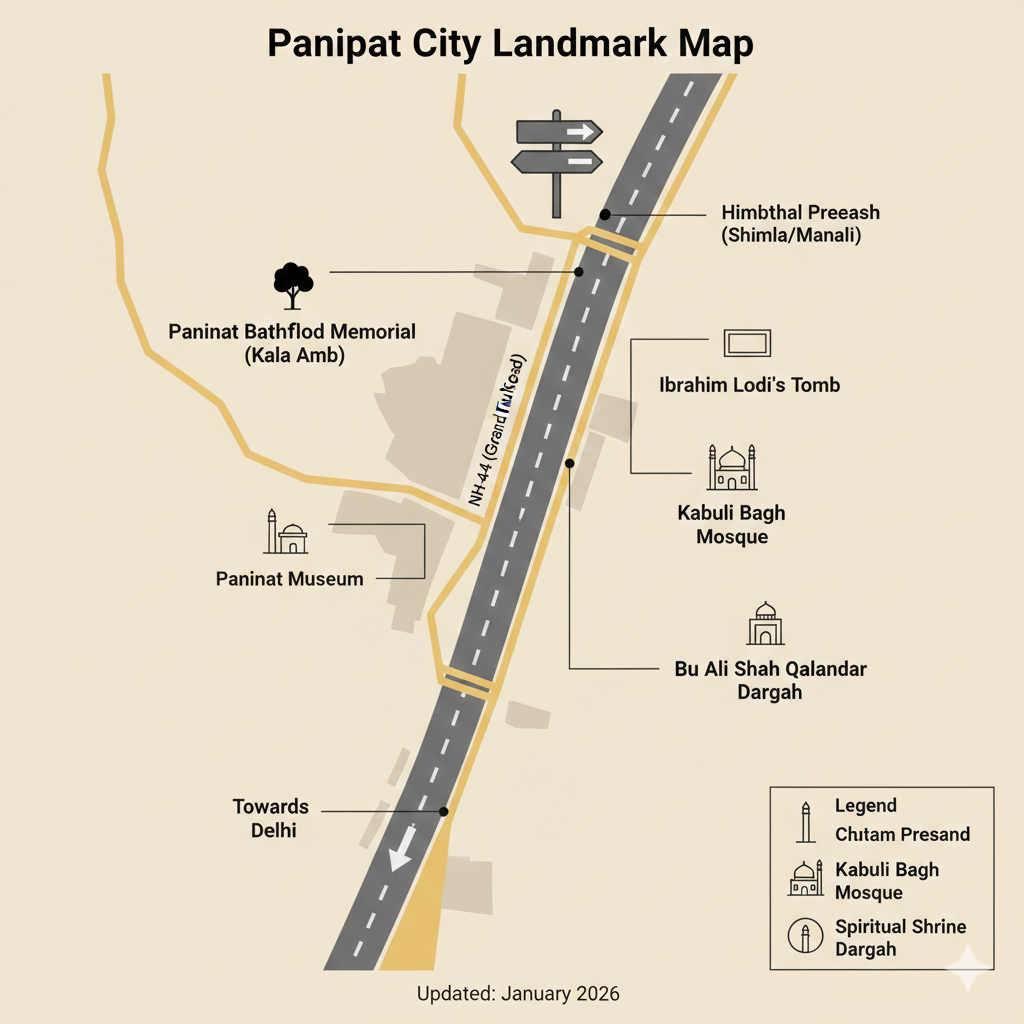
While its history is captivating, Panipat offers a range of sights to engage every visitor:
- Kala Amb (Black Mango) Park: This tranquil memorial marks the site of the Third Battle. Legend has it that the immense bloodshed turned the leaves of a mango tree black. Today, it’s a peaceful park with a monument, offering a moment of reflection on the sacrifices made.
- Ibrahim Lodi’s Tomb: A humble yet historically significant structure, this tomb commemorates the last Sultan of the Delhi Sultanate, Ibrahim Lodi, who fell in the First Battle. It’s a poignant reminder of the end of one era and the beginning of another.
- Panipat Museum: Essential for history enthusiasts, this museum meticulously showcases artifacts, weapons, battle strategies, and detailed accounts of the Panipat battles and the region’s rich past. It provides a comprehensive context to the events that unfolded here.
- Kabuli Bagh Mosque: Constructed by Babur to celebrate his victory in the First Battle of Panipat, this mosque is named after his wife, Kabuli Begum. It is an early example of Mughal architecture in India, featuring a beautiful blend of Persian and Indian styles.
- Dargah of Bu Ali Shah Qalandar: A revered 700-year-old Sufi shrine, this dargah is a testament to the syncretic culture of India. It attracts devotees of all faiths, seeking blessings and peace. The intricate carvings and spiritual ambiance make it a captivating visit.
Panipat as a Stopover on Your Himachal Tour from Delhi
Integrating Panipat into your Delhi-Himachal road trip is remarkably easy and highly recommended.
Ideal Scenario:
- Morning Departure from Delhi: Start early from Delhi, aiming to reach Panipat within 2-3 hours.
- Historical Exploration (2-3 Hours): Dedicate 2-3 hours to visit the key historical sites.
- Option 1 (Quick Stop): Focus on Kala Amb and Ibrahim Lodi’s Tomb for a concise historical overview.
- Option 2 (Detailed Stop): Include the Panipat Museum and Kabuli Bagh Mosque if time permits.
- Lunch Break: Panipat has numerous roadside eateries and dhabas offering delicious local Haryanvi cuisine, perfect for a quick and satisfying lunch.
- Continue to Himachal: After your historical and culinary stop, resume your journey towards Himachal Pradesh, feeling enriched by the historical detour.
Why it’s a perfect fit:
- No Major Detour: Panipat is directly on the highway, requiring minimal deviation from your route.
- Breaks the Journey: It provides a meaningful break from continuous driving, making the overall trip more enjoyable.
- Adds Value: You add a significant historical and cultural dimension to your trip, beyond just the scenic beauty of the mountains.
Conclusion:
Panipat is far more than just a transit point; it’s a profound historical canvas where the destiny of India was repeatedly painted. By understanding its significance and exploring its landmarks, you add an invaluable layer of depth to your travel experience. So, the next time you plan a road trip from Delhi to the enchanting hills of Himachal, remember to pause, reflect, and uncover the timeless tales embedded in the very soil of Panipat.