
Rameshwaram & Dhanushkodi – Where Faith Meets the End of Land
Located at the southern tip of India, Rameshwaram and Dhanushkodi are among the most fascinating destinations in Tamil Nadu. Blending mythology, history, spirituality, and raw natural beauty, these twin destinations attract pilgrims, history lovers, photographers, and offbeat travelers alike.
Introduction to Rameshwaram and Dhanushkodi
Rameshwaram is one of the Char Dham pilgrimage sites of Hinduism and a sacred town closely associated with Lord Rama.
Dhanushkodi, located about 20 km from Rameshwaram, is a hauntingly beautiful ghost town at the edge of India where the Bay of Bengal meets the Indian Ocean.
Together, they form a destination that is deeply spiritual yet strikingly dramatic.
Rameshwaram: History, Mythology & Spiritual Significance
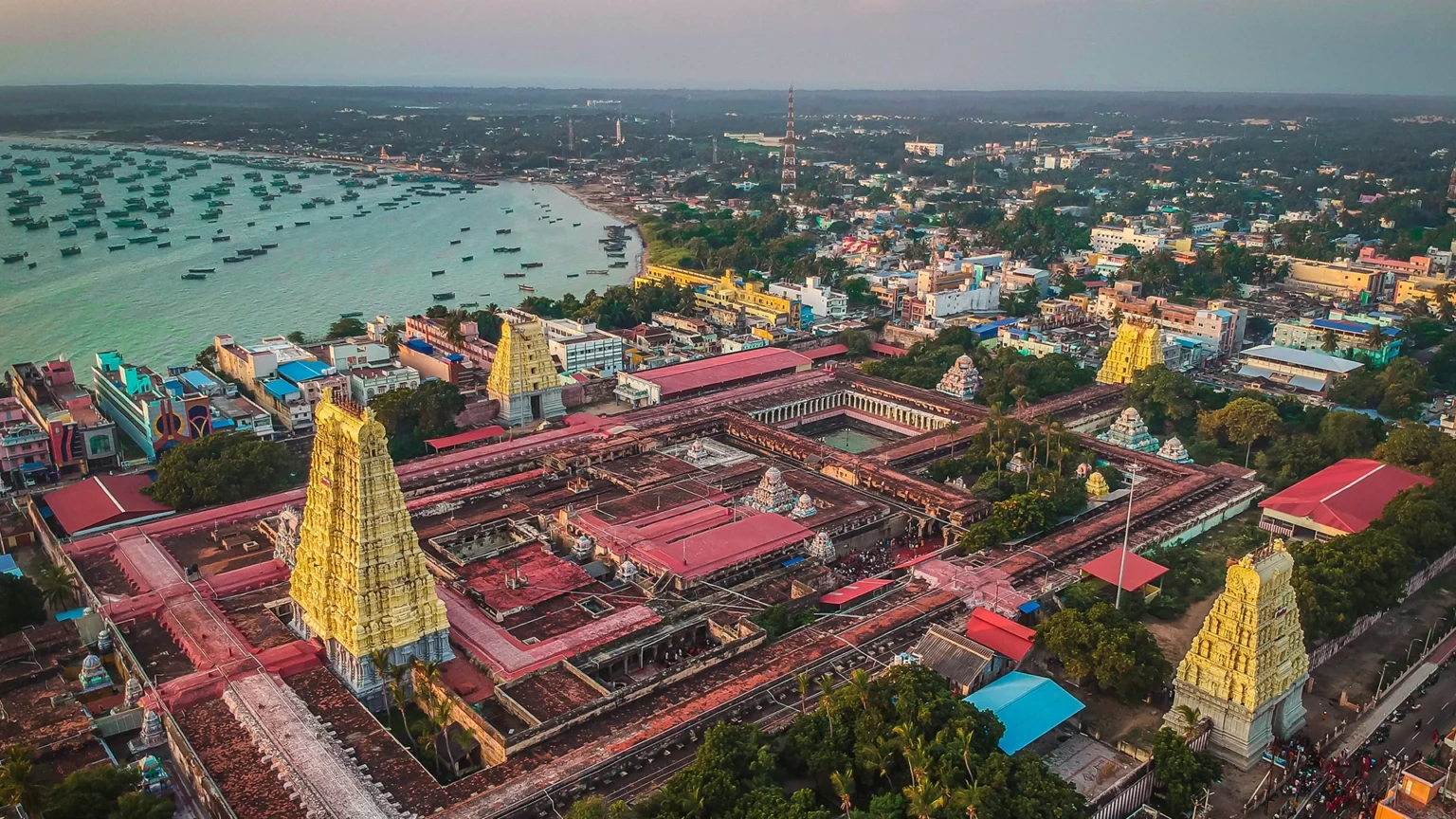
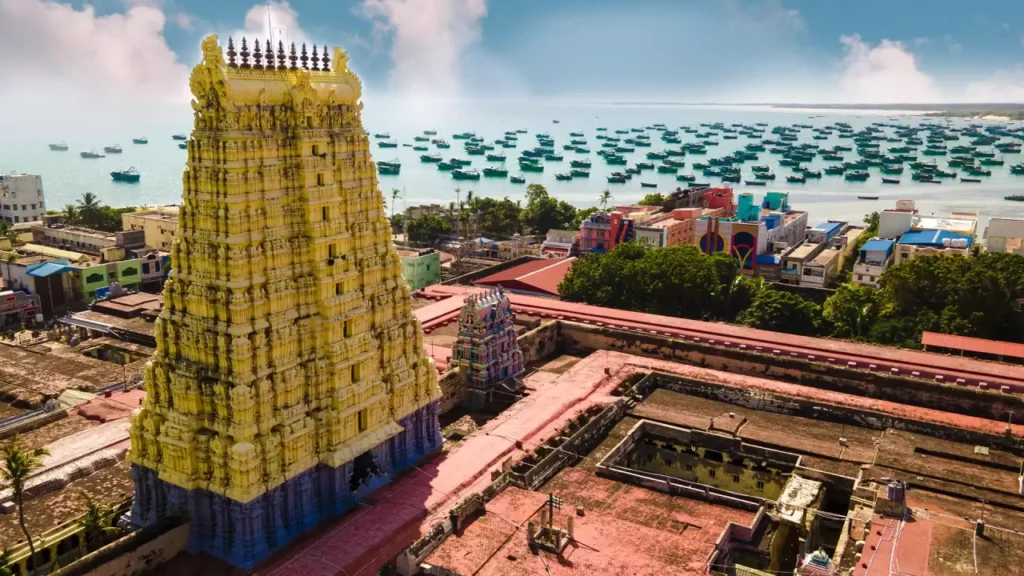
Rameshwaram holds immense importance in the Ramayana. According to legend, Lord Rama worshipped Lord Shiva here to atone for killing Ravana. The Ramanathaswamy Jyotirlinga, established by Lord Rama, is one of the 12 Jyotirlingas of Lord Shiva.
This sacred town is also associated with the beginning of Ram Setu (Adam’s Bridge). For Hindus, a pilgrimage to Rameshwaram is believed to grant moksha (liberation).
The Ramanathaswamy Temple was expanded by the Pandya and Chola dynasties, with major architectural additions between the 12th and 17th centuries. It is world-famous for having the longest temple corridors in the world.
Major Attractions in Rameshwaram
Ramanathaswamy Temple
- One of the 12 Jyotirlingas of Lord Shiva
- Over 1,200 intricately carved stone pillars
- 22 sacred wells (Theerthams) inside the temple complex
Agni Theertham
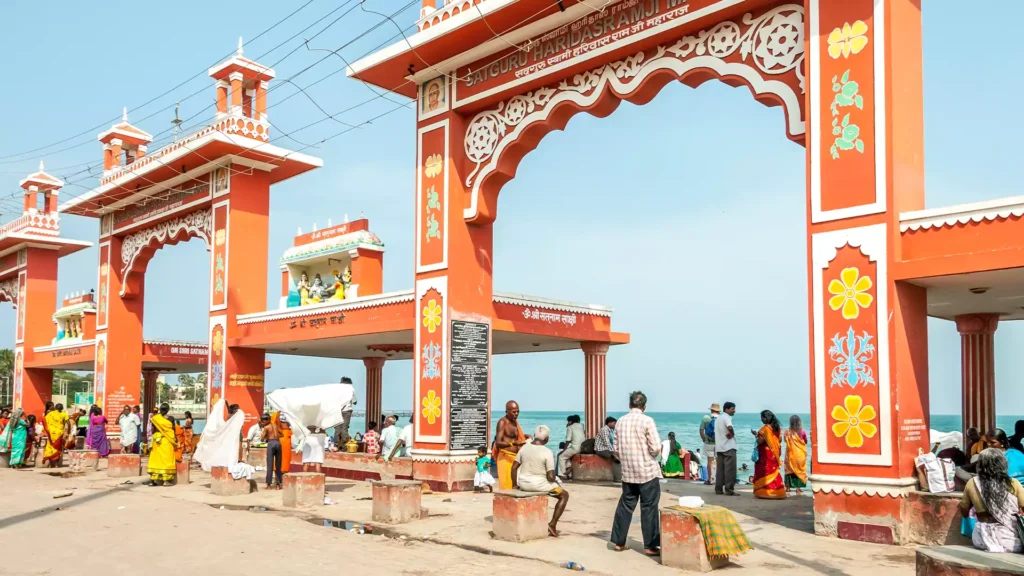
A sacred sea located near the temple where pilgrims take a ritual bath before temple darshan.
Gandhamadhana Parvatham
- Highest point in Rameshwaram
- Panoramic views of the island
- Believed to house Lord Rama’s footprint
APJ Abdul Kalam Memorial
Dedicated to India’s former President Dr. A.P.J. Abdul Kalam — a must-visit for history and inspiration lovers.
Dhanushkodi: The Ghost Town at the Edge of India
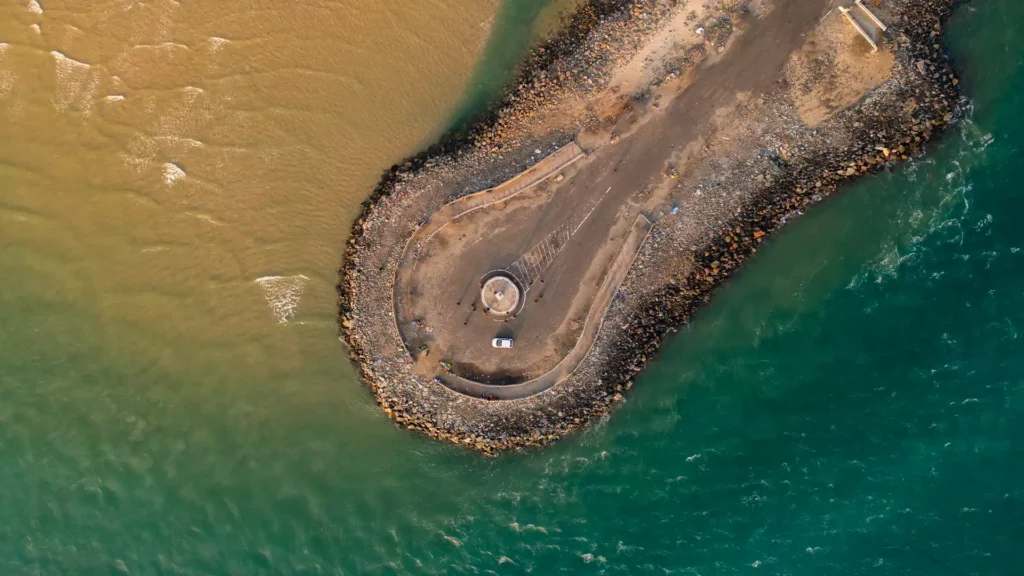
Dhanushkodi was once a thriving port town until disaster struck in 1964. A powerful cyclone destroyed the town overnight, killing over 1,800 people. The government later declared it uninhabitable, and the town was abandoned.
Today, the ruins of houses, a church, railway station, and post office stand frozen in time, giving Dhanushkodi its eerie yet mesmerizing character.
According to mythology, this is the place where Lord Rama broke his bow (Dhanush) after defeating Ravana. It marks the starting point of Ram Setu. The name Dhanushkodi literally means “End of the Bow.”
What Makes Dhanushkodi Unique?
- Confluence of the Bay of Bengal and the Indian Ocean
- One of the southernmost accessible points of India
- Raw landscapes with turquoise waters and endless sands
- A surreal blend of spirituality, tragedy, and nature
Best Things to Do in Dhanushkodi
- Explore abandoned ruins
- Visit Dhanushkodi Beach
- Witness the sea meeting point
- Photography and drone shots (where permitted)
- Experience complete silence and isolation
How to Reach Rameshwaram and Dhanushkodi
By Air: Nearest airport is Madurai Airport (170 km), well connected to Chennai, Bengaluru, and Mumbai.
By Train: Rameshwaram Railway Station has direct trains from Chennai, Madurai, and Coimbatore.
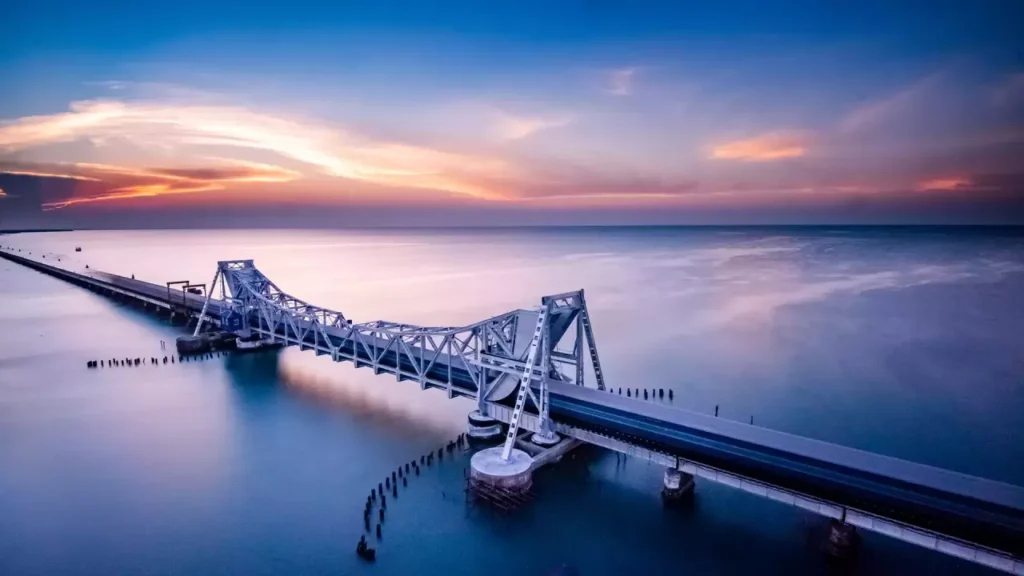
By Road: Excellent road connectivity with the iconic Pamban Bridge connecting mainland India to Rameshwaram Island.
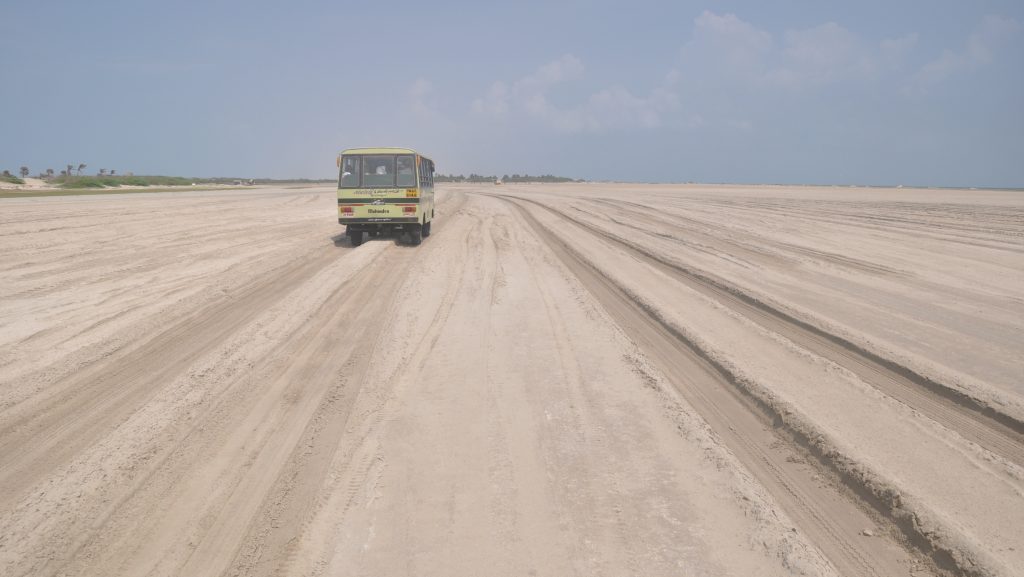
Dhanushkodi is about 20 km from Rameshwaram. Private jeeps and taxis operate from Rameshwaram. Entry is allowed only during daytime. Roads beyond a point are sandy, and personal vehicles are restricted near the final stretch.
Best Time to Visit
- Best months: October to March
- Avoid: Peak summer (April–June)
- Monsoon: July–September (occasional rough seas)
Early mornings and late afternoons are ideal for visiting Dhanushkodi.
Conclusion
Rameshwaram and Dhanushkodi together narrate a powerful story — of devotion, destruction, resilience, and faith. From sacred temples echoing centuries of belief to wind-swept ruins standing against endless seas, this journey is unlike any other in India.
If you seek a destination that is spiritually uplifting, historically rich, and visually dramatic, Rameshwaram and Dhanushkodi deserve a place on your travel list.