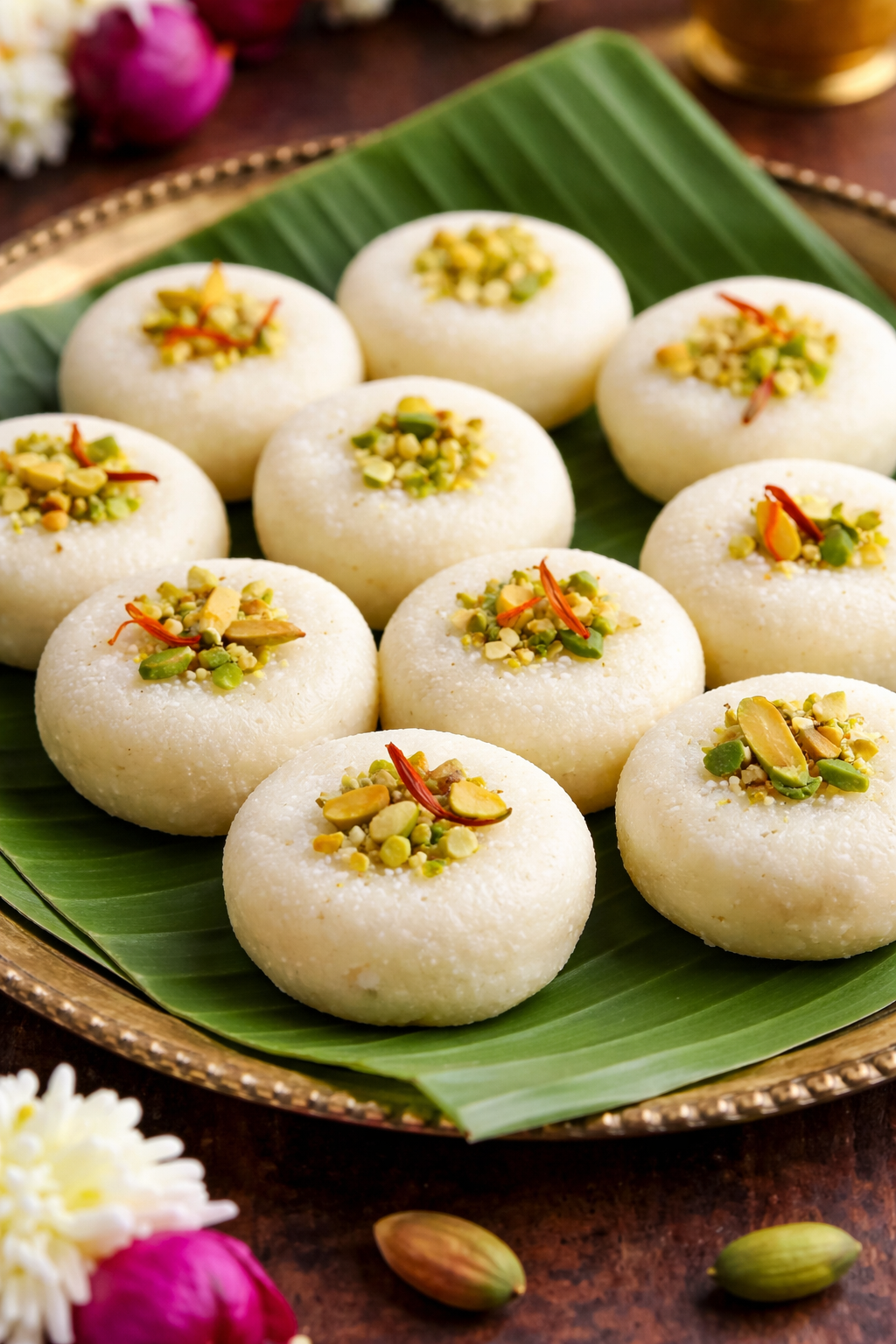

If there is one delicacy that captures the soul of West Bengal, it is Sandesh (or Shondesh). This elegant, melt-in-the-mouth sweet is more than just a dessert; it is a symbol of Bengali craftsmanship, hospitality, and a history that stretches back centuries.
Whether you are a food traveler or a home cook looking to master the art of Chhena, this guide covers everything you need to know about the king of Bengali mishti.
What is Sandesh?
At its core, Sandesh is a fudge-like sweet made from freshly curdled milk (Chhena) and sugar or jaggery. Unlike many Indian sweets that are deep-fried or soaked in heavy syrup, Sandesh is prized for its delicate texture and light, milky flavor.
The Portuguese Connection
Interestingly, the Sandesh we love today was born from cultural fusion. While ancient Bengali literature mentions a sweet called “Sandesh,” it was likely made of Kheer (solidified milk). It wasn’t until the Portuguese arrived in Bengal with their cheese-making techniques that Bengalis began curdling milk to create Chhena. Local confectioners, known as Moyras, perfected this “spoiled milk” into the sophisticated treat we see today.
Must-Try Varieties of Sandesh
West Bengal offers a dizzying array of Sandesh, often categorized by their texture and the season.
| Variety | Description |
| Nolen Gurer Sandesh | The winter superstar. Made with Date Palm Jaggery, it has a smoky, caramel-like flavor. |
| Kanchagolla | The “raw” version. It is soft, barely cooked, and incredibly moist. |
| Jalbhora | A culinary marvel shaped like a palm fruit with a liquid center (syrup or jaggery). |
| Korapak vs. Norompak | Korapak is hard and has a longer shelf life; Norompak is soft and delicate. |
| Sarpuria | A baked or layered version of Sandesh famous in the Nadia district. |
How to Make Authentic Sandesh at Home
You don’t need a specialized kitchen to make Sandesh, but you do need patience.
Ingredients:
- 1 liter Full-fat milk (Whole milk is essential for creamy Chhena)
- 2 tbsp Lemon juice or Vinegar (to curdle)
- 1/4 cup Powdered sugar (adjust to taste)
- 1/2 tsp Cardamom powder
- Garnish: Saffron strands or chopped pistachios
Step-by-Step Instructions:
- Prepare the Chhena: Boil the milk, then slowly add the lemon juice until the whey separates. Strain it through a muslin cloth and rinse with cold water to remove any lemony tartness.
- Hang and Drain: Squeeze out the excess water and hang the cloth for about 30 minutes. The Chhena should be moist but not dripping.
- The Kneading Secret: This is the most important part. Rub the Chhena with the base of your palm for 5–10 minutes until it becomes completely smooth and starts releasing a bit of oil.
- The “Paak” (Cooking): Add sugar and cardamom to the kneaded dough. Cook it in a non-stick pan on very low heat for 4–5 minutes.
Pro Tip: Do not overcook! If the mixture becomes grainy or dry, you’ve gone too far. It should just come together as a soft ball. - Shape and Serve: Let it cool slightly, then roll into balls or press into traditional wooden molds.
Why Sandesh is the “Healthier” Mithai
Compared to syrup-heavy sweets like Gulab Jamun or Rasgulla, Sandesh is relatively lower in calories. Since it is primarily made of cottage cheese, it is rich in calcium and protein. However, moderation is key due to the sugar content. For a healthier twist, many now use Stevia or organic jaggery.
Summary: A Taste of Heritage
Sandesh is not just a sweet; it’s a story of Bengal’s evolution. From the bustling lanes of North Kolkata’s historic shops like Bhim Chandra Nag to modern fusion kitchens, it remains the heart of every Bengali celebration.
WHERE TO BUY SANDESH IN KOLKATA
Trailblazing the Sandesh search in Kolkata! I’ll dive into the history and specialties of these legendary shops. Kolkata’s sweet shops, or “mishit dokans,” are pillars of the city’s cultural heritage, with many dating back to the 19th century. Sandesh is the centerpiece of this tradition.
Girish Ch. Dey & Nakur Ch. Nandy
Girish Ch. Dey & Nakur Ch. Nandy is perhaps the most revered destination for Sandesh purists, having served the city since 1844. This shop is famous for maintaining traditional techniques and offering an incredible variety of textures and flavors.
- Signature Specialties: Known for their Jol Bhora (sandesh with a liquid center) and seasonal Nolen Gur (date palm jaggery) varieties.
- Atmosphere: It retains an old-world charm with a simple, counter-serve setup that focuses entirely on the quality of the sweets.
Bhim Chandra Nag
Bhim Chandra Nag Click was established in 1826 and is legendary for creating the Ledikeni (named after Lady Canning). It has been a favorite of historical figures and remains a cornerstone of the Bowbazar area.
- Highlights: Famous for their Dilkhush Sandesh and Abar Khabo (which literally translates to “I’ll eat it again”).
- Historical Fact: The shop still houses a massive grandfather clock gifted by Thomas Cooke in the mid-19th century.
Balaram Mullick & Radharaman Mullick
Balaram Mullick & Radharaman Mullick started in 1885 and is widely credited with bridging the gap between traditional Bengali sweets and modern tastes. While they respect history, they are also known for their innovative fusions.
- Features: Offers unique creations like baked Sandesh and chocolate-infused Bengali sweets.
- Variety: They provide a vast selection that includes classic Korapak (hard) and Naram-pak (soft) Sandesh.
Nalin Chandra Das and Sons
Nalin Chandra Das and Sons Click to open side panel for more information has been a staple in North Kolkata since 1841. This shop is particularly famous for its mastery of seasonal ingredients and traditional craftsmanship.
- Specialties: Highly regarded for their Manohara and various fruit-flavored Sandesh.
- Reputation: They are known for using very high-quality chhena, resulting in a particularly smooth and refined texture.
K.C. Das
K.C. Das is a household name worldwide, founded by the son of Nobin Chandra Das (the inventor of the Rasgulla). While famous for Rasgullas, their Sandesh is equally historic.
- Must-Try: Their Rossomalai and various steamed Sandesh options are highly recommended.
- Legacy: As one of the most successful sweet chains, they have played a major role in globalizing Bengali confectionery.