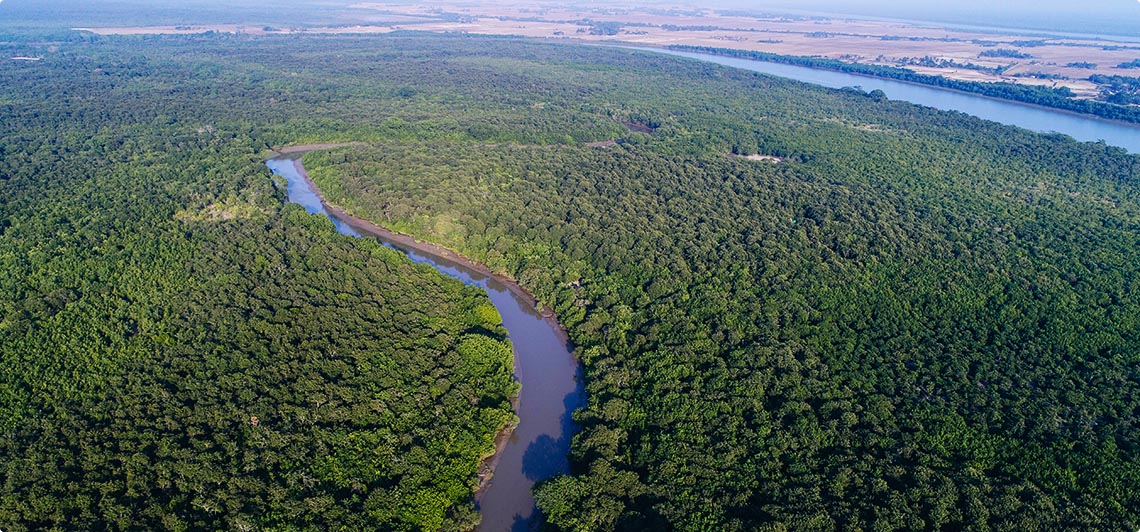

Bhitarkanika National Park, spread over a vast area of 672 sq km, is India’s second-largest mangrove ecosystem after the Sundarbans. The park is a unique network of creeks and canals fed by the Brahmani, Baitarani, Dhamra, and Patasala rivers, creating a rich and dynamic ecosystem.
Its proximity to the Bay of Bengal enriches the soil with salts, supporting vegetation and wildlife typical of tropical and subtropical intertidal regions. This makes Bhitarkanika one of the most biologically diverse regions in eastern India.
Wildlife of Bhitarkanika
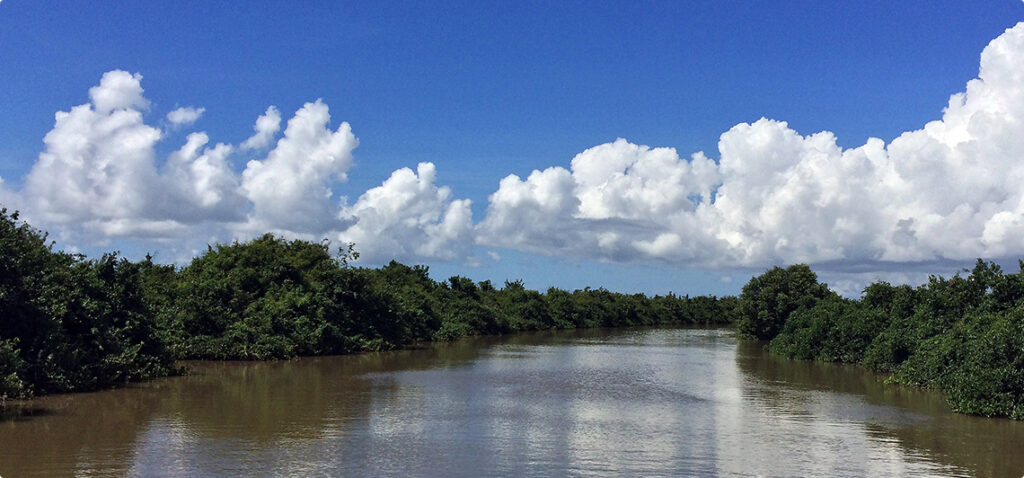
Bhitarkanika is home to the largest congregation of endangered Saltwater Crocodiles in India. These crocodiles are the apex predators of the region.
The sanctuary also shelters a wide range of wildlife, including:
- Saltwater Crocodiles
- Water Monitor Lizards
- Indian Pythons
- Deer, Hyenas, and Wild Boars
- Otters and Fishing Cats
- Rhesus Monkeys and Jungle Cats
During winter, the sanctuary transforms into a haven for migratory birds, adding vibrant life to the ecosystem.
Gahirmatha Beach & Olive Ridley Turtles
Gahirmatha Beach, forming the eastern boundary of the sanctuary, is globally significant as it hosts the world’s largest nesting colony of Olive Ridley Sea Turtles.
Every year, thousands of turtles arrive here for mass nesting (Arribada), making Bhitarkanika one of the most important turtle conservation sites in the world.
Mangroves & Historical Significance
Once the hunting ground of the royal Raj Kanika family, Bhitarkanika is now renowned for its dense mangrove forests. These mangroves dominate the wetlands and play a crucial role in protecting the coastline and sustaining wildlife.
The erstwhile hunting porch of the Maharaja still stands, adding heritage value to the sanctuary.
Baggahana Heronry – A Rare Birding Spectacle
A unique attraction within Bhitarkanika is the Baggahana Heronry near Surajpore Creek. Thousands of birds gather here during the nesting season.
The aerial acrobatics performed by birds before mating is a spectacular sight. Bhitarkanika is also home to eight rare species of kingfishers, making it a paradise for birdwatchers.
Birdlife at Bhitarkanika
The sanctuary boasts over 215 species of birds, including resident and migratory species from Europe and Central Asia.
Commonly spotted birds include:
- Asian Openbill Stork
- Cormorants and Darters
- Black Ibis and Egrets
- Sandpipers and Sea Eagles
- Whistling Teals, Kites, and Seagulls
- Eight varieties of Kingfishers
Reptiles & Mammals
In addition to crocodiles, Bhitarkanika supports a rich variety of reptiles and mammals such as:
- Venomous Cobras
- Indian Pythons
- Endangered Water Monitor Lizards
- Chital and Sambar Deer
- Wild Pigs and Wild Boar
- Otters and Fishing Cats
Best Time to Visit Bhitarkanika
The winter season (October to February) is the best time to visit Bhitarkanika.
- Ideal for spotting migratory birds
- Pleasant weather for boat safaris and wildlife exploration
- January to March is best for witnessing Olive Ridley sea turtle nesting
How to Reach Bhitarkanika
By Road
Bhitarkanika Wildlife Sanctuary is accessible via state highways from Bhadrak and Kendrapara.
By Rail
The nearest railway station is Cuttack, approximately 100 km from the sanctuary.
By Air
The closest airport is Biju Patnaik International Airport, Bhubaneswar, located about 160 km away.